Blog

How Does Car Air Conditioning Work? Knowledge to Enhance Your Business

Jun 12, 2026

If you are a distributor, wholesaler, procurement manager, repair shop, or OEM factory, this article is worth a read. It combines professional knowledge of automotive systems, from the overall system cycle, the function of each key component, to the signs of component failures. The goal is to help you choose the right products, make informed decisions, and provide your customers with more professional support.


How Car Air Conditioning Works

In simple terms, a car air conditioning system operates through a continuous cycle of refrigerant changing between gas, liquid, and mixed states. During this cycle, the refrigerant absorbs heat through evaporation and releases heat through condensation, which is the core principle behind automotive cooling.
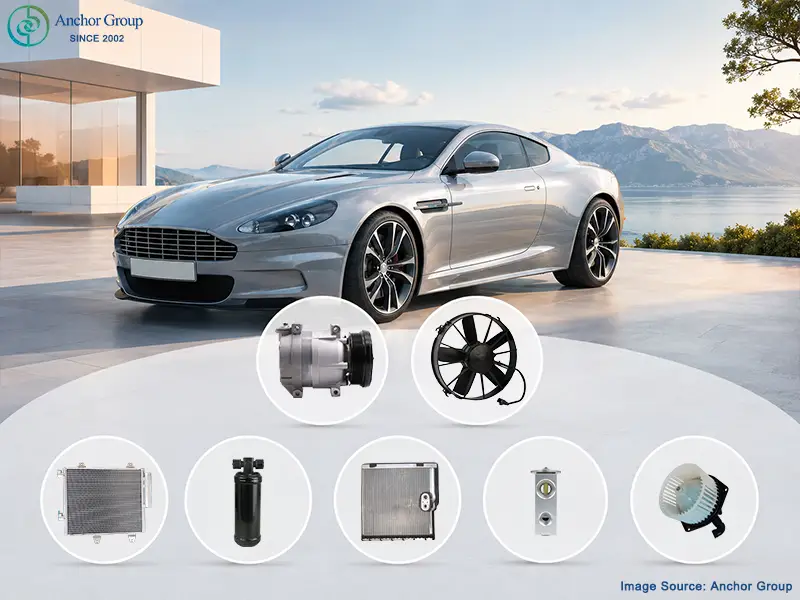
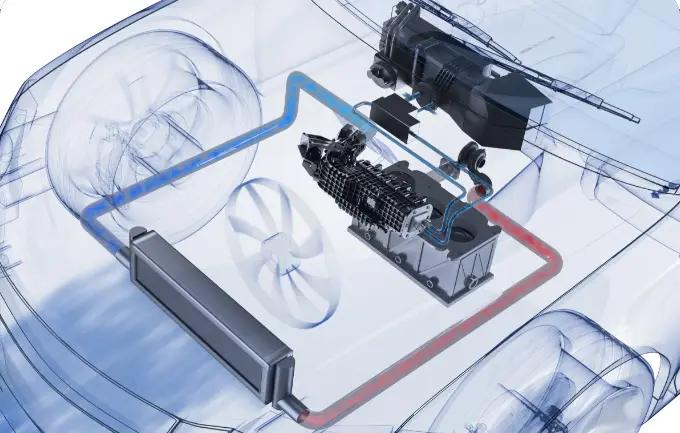
This picture shows the key components of the car ac system: How Does Car Air Conditioning Work?


The Role of Each Component in the System Cycle

In the AC cycle, the refrigerant constantly evaporates and condenses, absorbing and releasing heat. Understanding the role of each component helps you better understand system operation and troubleshoot issues.

Compressor
The compressor is often called the “heart” of the car air conditioning system because it compresses low-pressure, low-temperature gas into high-pressure, high-temperature gas. Different types of vehicles use different compressors, so selecting the right one should be based on the specific vehicle model.

Condenser
After leaving the compressor, the refrigerant flows into the condenser. The condenser transforms the high-pressure, high-temperature gas into high-pressure liquid while releasing heat. A condenser fan blows outside air across the condenser to dissipate the heat into the atmosphere.

Receiver-Drier
The liquid refrigerant then passes through the receiver-drier, which removes moisture to prevent freezing or corrosion in the system. It also filters out debris to prevent clogging of the expansion valve.

Expansion Valve
The high-pressure liquid refrigerant passes through the small opening of the expansion valve, which causes a sudden drop in pressure. This lowers the boiling point of the refrigerant and partially vaporizes it, creating a low-pressure liquid-gas mixture.

Evaporator
In the evaporator, the refrigerant absorbs heat from the surrounding air, fully vaporizing into low-pressure, low-temperature gas. The blower draws in warm cabin air, passes it through the evaporator to cool and dehumidify it, and then delivers cold air to the interior.

Cycle Restart
After leaving the evaporator, the low-pressure gas returns to the compressor, starting a new cycle.


Common Signs of Component Failures

Understanding the role of each key component makes it easier to identify problems in the AC system. Each component shows specific signs when it malfunctions.

Compressor Failure Signs and Causes

  • Compressor doesn’t work or cycles on and off frequently: Caused by a damaged electromagnetic clutch, faulty control valve, abnormal pressure switch, incorrect refrigerant charge, or electrical issues.
  • Abnormal noise: Grinding, knocking, or high-pitched squeals usually indicate worn bearings, clutch issues, or internal wear of pistons or swashplates, possibly due to insufficient lubrication.
  • Poor or no cooling: When internal seals are worn or the compressor loses compression, the system cannot maintain proper pressure, resulting in reduced or no cooling.
  • Frost on the compressor surface: Usually caused by abnormal system pressures, a faulty expansion valve, or irregular refrigerant flow, leading to excessively low suction temperature.

Condenser Failure Signs

  • Air blows warm or natural: When the condenser’s heat dissipation is poor, the fins are blocked, the fan fails, or refrigerant leaks, high-pressure refrigerant cannot condense properly, causing insufficient cooling.
  • Oil stains on the condenser surface: Indicates a leak where refrigerant carries lubricating oil out of the system.
  • High-pressure abnormality: Continuous high-pressure readings often indicate poor condenser performance, fan failure, or overcharging, increasing compressor load and risking system protection shutdown.

Receiver-Drier Failure Signs

  • Intermittent cooling (ice blockage): Saturated or blocked desiccant restricts refrigerant flow, causing evaporator frosting and fluctuating cooling.
  • Low suction pressure, high discharge pressure, frozen expansion valve: Blockage or desiccant particles obstruct refrigerant flow, causing pressure imbalance and severe frost at the expansion valve.
  • Bubbles in sight glass even after refilling refrigerant: Indicates desiccant failure or blockage; refrigerant circulation remains poor.
  • Oil stains at connections, slow refrigerant leak: Caused by aged seals or loose fittings.
  • Ice blockage reoccurs shortly after service: Old or blocked desiccant allows refrigerant to flow unevenly.
  • New compressor fails soon after installation: Debris or poor refrigerant flow from the drier can overload or damage the compressor.

Also Read 7 Common AC Dryer Failures and Expert Solutions for Replacement and Maintenance

Expansion/Control Valve Failure Signs

  • Uneven or intermittent cooling: The valve cannot regulate refrigerant flow accurately, causing uneven evaporator heat absorption.
  • Insufficient cooling even with adequate refrigerant: Flow restrictions prevent the evaporator from absorbing enough heat.
  • Compressor overheating: Valve failure prevents effective heat absorption, increasing compressor load.
  • Clicking, rattling, or low-frequency vibration during operation: Unstable valve operation affects compressor pistons or swashplate motion.
  • No cooling at all: Valve stuck open or closed, refrigerant cannot enter the evaporator.

Also Read:Understanding the AC Compressor Control Valve Function in Automotive Air Conditioning Systems

Evaporator Failure Signs

  • Air not cold enough or uneven temperature: Frost, blockage, or insufficient refrigerant flow reduces heat absorption efficiency.
  • High cabin humidity, foggy windows: Evaporator fails to remove enough moisture.
  • Musty or moldy smell: Water accumulation or long-term neglect allows bacteria or mold growth.
  • Unusual noise (water trickling or airflow abnormal): Caused by water in evaporator or blockage affecting airflow.
  • Refrigerant leaks: Rapid loss of cooling after recharge or visible oil marks/hissing indicates leaks.

Conclusion

A car air conditioning system may seem complex, but understanding its cycle and the role of each component makes troubleshooting and maintenance much easier. By recognizing the signs of component failures, distributors, wholesalers, repair shops, and OEMs can select the right products, make informed purchasing decisions, and provide better technical support to customers.

Mastering this knowledge not only improves service quality but also enhances trust and credibility with clients, ultimately supporting business growth in the automotive HVAC market.


Welcome Your Inquiry
Fill Out Your Inquiry And We Will Get Back To You 24 H.
Contact Us Now If You Have Any Question About Our Company And Products. Any Of Your Inquiry And Suggestion Will Be Highly Appreciated.

    *All The Information You Fill Out Will Be Guaranteed Not To Be Disclosed To
    Third Parties.

    X