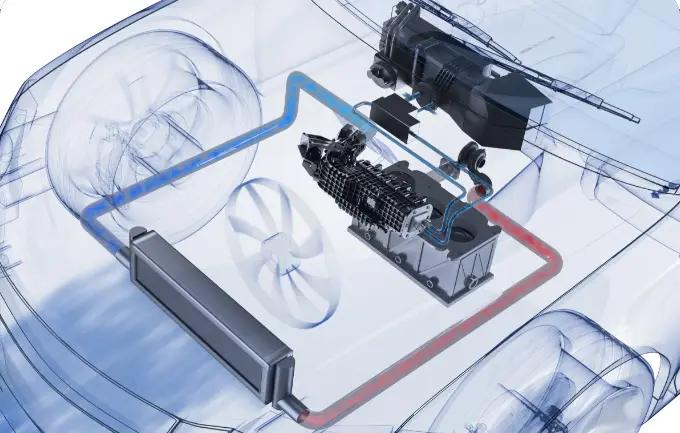
A transport refrigeration unit (TRU) is a specialized cooling system installed on refrigerated vehicles to maintain precise temperatures during transportation. By creating a controlled cold-chain environment, transport refrigeration units help preserve the quality, safety, and shelf life of temperature-sensitive products throughout the delivery process.
These systems are widely used across industries such as:
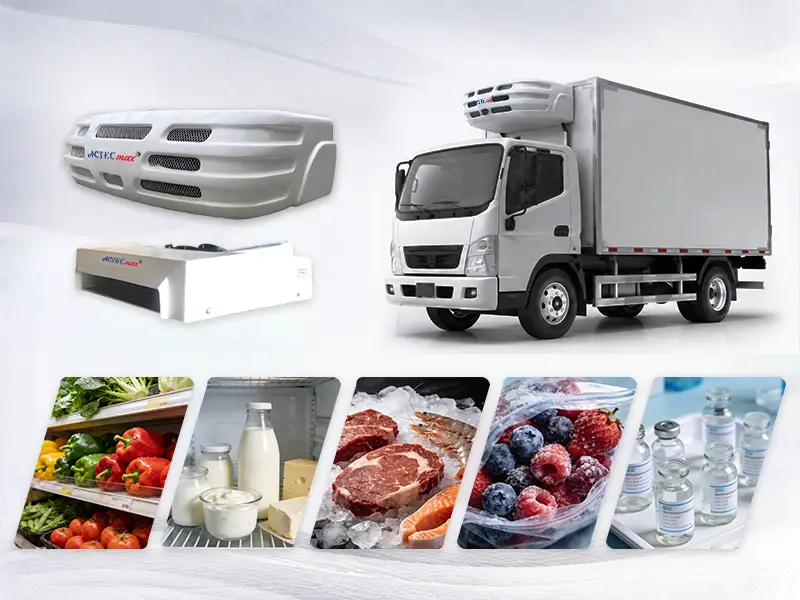
Whether operating a small refrigerated van for urban deliveries or a heavy-duty truck for long-haul logistics, selecting the right transport refrigeration unit is essential for protecting cargo and meeting cold chain requirements.
Transport refrigeration units are generally available in two structural configurations: integrated units and split units.
An integrated refrigeration unit combines the compressor, condenser, evaporator, and control system into one compact assembly.
Advantages
Best suited for
A split refrigeration unit separates the condenser assembly and evaporator assembly, allowing each component to be installed independently.
This configuration provides greater cooling capacity and more uniform airflow throughout the cargo compartment.
Advantages
Best suited for
Selecting the right refrigeration system involves more than simply choosing the largest cooling capacity. Buyers should evaluate several key factors.
The refrigerated compartment size determines the cooling capacity required.
A unit with insufficient capacity may fail to maintain the target temperature, while an oversized system increases energy consumption and operating costs.
As a general guideline:
Matching the refrigeration capacity to the cargo volume improves temperature stability and operating efficiency.
The refrigeration unit should be compatible with the vehicle’s available power source.
Selecting the correct power configuration helps reduce operating costs while ensuring reliable cooling performance.
Vehicle body design also affects the choice of refrigeration unit.
Common installation options include:
Choosing the right installation layout maximizes cargo space while improving cooling efficiency.
Different cargo requires different temperature conditions.
Typical applications include:
| Cargo Type | Recommended Temperature |
|---|---|
| Fresh produce | 0°C to 5°C |
| Dairy products | 0°C to 4°C |
| Frozen foods | -18°C or below |
| Pharmaceuticals | 2°C to 8°C (or as specified by manufacturer) |
| Ice cream | -20°C to -25°C (premium quality: -23°C to -29°C) |

Selecting a refrigeration unit capable of maintaining the required temperature under varying ambient conditions is essential for product quality and regulatory compliance.
Beyond refrigeration performance, selecting a reliable supplier can significantly reduce long-term operating costs.
A professional transport refrigeration manufacturer should provide:
A transport refrigeration unit is a critical investment for any cold chain operation. The right system depends on your cargo volume, vehicle type, power source, installation configuration, and required temperature range.
Whether you operate refrigerated vans for city distribution or heavy-duty trucks for long-distance logistics, selecting a properly matched refrigeration solution improves cargo protection, operating efficiency, and long-term reliability.
At Anchor Group, we supply a complete range of transport refrigeration solutions for refrigerated vans, trucks, and trailers. Our team can recommend the most suitable model based on your vehicle dimensions, cargo type, operating temperature, and transportation distance.
Contact us today for expert product selection, OEM customization, and competitive wholesale pricing for your next cold chain project.